What Are the Top Retail Trends ISVs Need to Watch in 2026?
Retail trends typically reflect consumers’ search for the easiest way to shop. And changes in behavior and technology adoption this year are no different. Expect momentum to continue for agentic AI, social commerce, phygital retail, and retail media.
Agentic AI
According to Salesforce, three-quarters of retailers believe AI agents will be a key force driving sales next year. McKinsey & Company believes the impact will be a giant leap forward in how consumers shop. Agentic AI allows consumers to use agents to find new products or services, review features, compare prices, arrange logistics, and even make payments. As agents learn, they’ll require less effort from the shoppers who use them, even to reorder when products run out. McKinsey is predicting rapid adoption. The U.S. retail market could see up to $1 trillion generated by AI agents by 2030.
How ISVs Can Prepare for Agentic AI
To prepare to connect retailers using your software with AI agents, ISVs should integrate with enablers such as Model Context Protocol (MCP), Agent2Agent (A2A) Protocol, Agent Payments Protocol (AP2), and Agentic Commerce Protocol (ACP). Also, update web platforms and other applications with structured data so that AI can understand them easily. You’ll also need to address access controls to enable agent interactions.
Social Commerce
The global social commerce market is expected to be one of the fastest-growing markets over the next several years. Grand View Research reports that in 2024, the total market size was estimated at $1.16 trillion and projects that it will grow at a 36.4 percent CAGR from 2025 to 2033 to reach $17.83 trillion by 2033. Social platforms are encouraging this growth by becoming more shoppable, reducing friction for the consumer.
How ISVs Can Facilitate Social Commerce
You can offer retailers tools that enable consumers scrolling on social media to buy products with the fewest clicks. Offer merchants brandable payment links that allow them to take customers to a payment page when they interact with a social media post.
Phygital Retail
Top retailers are blending the best of physical and digital shopping. Retail Touchpoints reports that more than half of shoppers, 61 percent, say that their phone is very important to their shopping experience. And 43 percent of shoppers say they’d spend more for meaningful experiences. Retailers are responding with enhancements like virtual reality (VR) to take the in-store experience online and novel experiences like an arctic cold room to bring the outside world to the store. Brands also recognize that shoppers want to engage with them across all channels. They are looking for ways to make the transition from channel to channel seamless and to personalize service with relevant offers and product suggestions.
How ISVs Can Enhance Phygital Retail
ISVs can find opportunities by researching their markets to find gaps that hold retailers back from offering the best of digital and physical shopping. Your team may hold the key to solutions for retailers eager to be the first to offer new phygital experiences.
Retail Media
Retailers are always looking for the balance between operational efficiencies and revenues that helps them operate profitably. Many retailers, looking to offset shrinking margins, have turned to retail media to boost revenues. A recent Salesforce survey found that 47% of retailers are now monetizing the space on in-store and digital screens with ad revenue. Retailers can offer their partners precise targeting at the point of purchase, where they have the consumer’s full attention.
How ISVs Can Enable Retail Media
ISVs should enable and support retail media networks with their point of sale or retail management systems. Securing these networks is also crucial for retailers to not only protect the screens that customers see but also retailers’ systems and their businesses overall.

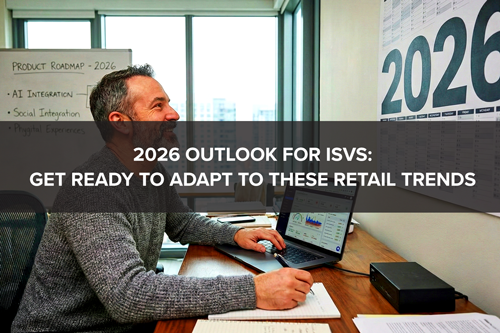 Retail trends for 2026 include agentic AI, social commerce, phygital retail, and retail media. ISVs should research their markets to gauge demand for new solutions and identify gaps their software can fill. A partnership with a payments innovator will be key to success when helping retailers move forward with these opportunities to engage customers and increase revenues.